Tuesday, September 20, 2011
Sunday, September 18, 2011
Chinua Achebe on literature and ethnicity
"The creative enterprise is a magical
space onto itself - the mind in mutual collaboration with the world and
its elements to produce something of aesthetic value. Creative writers
are like painters, using words to paint a literary tapestry. I think
that words have a magic, that human situations- one's environment,
culture, ‘ethnicity' as we have spent time re-discovering - can be
unburdened to join other factors wordsmiths use to create literary magic
- that extra dimension that the writer can conjure up by placing ideas
about the human condition side by side on paper.
I suppose that cultural contexts is
another name for what we have so far been calling the factors of
ethnicity. Quite clearly these factors do shape literature. The cultural context within which a writer finds him/herself is relevant in so far as it brings something of literary value - contributes to the world story - and does not claim superiority over, deny, obscure or jaundice, even oppress other perspectives or stories. But having said that let me
now admit that there are other factors and not least among them is the
genius and free-will of the author."


Sunday, September 11, 2011
What I write is politics: Arundhati Roy
"What I write is politics. Traditionally this is what writers have done. So to separate commentary from writing, from politics, minimises politics, minimises writing, and minimises commentary. This has historically been the role of writers. I could surely go and wear a khadi sari and sit in the forest and become a martyr but that’s not what I plan to do. I have no problem being who I am, writing what I have because I am not playing for sainthood here. I am not playing for popularity. I am not asking to be hailed as a leader of the masses. I am a writer who has a particular set of views and I use whatever skills I have, I deploy whatever skills I have, whatever means I have to write about them, not always on my own behalf but from the heart of the resistance."
Thursday, September 8, 2011
Chad Harbach: a writer to watch out for!
If you consider it in material terms, the last big writer was J. K. Rowling. She has lived her full course with glory and all, but she is dud now. So who would be the next big writer? The long search seems to have come to an end. And the new winner is a a young man in her early thirties: Chad Harbach, born and raised in Racine, Wisconosin, a founder- editor of n+1 magazine.
His 500 -page book is being released this week. A whopping advance( $665000), rave reviews even before the publication, excerpts in a popular magazine, authors like Franzen showering praise on the debut author, and the usual hypes that the publishing business embellish their blue-eyed boys with. The mammoth publicity machine is already at work, touting him as the rare hitter of contemporary fiction.
As ever, I have my doubts. Note the title of the book is "The Art of Fielding". Sounds atrocious as a fiction title. No play of imagination. Then it's about baseball. I don't want to mean that there can't be a good literary(?) novel about baseball. But it's somewhat repulsive for me.
Nevertheless, I find Chad a bit intriguing too. He seems kind of awkward, polite, candid, and even authentic in this interview. May be he's a real writer.
Before I sold this book I was kind of pretending I had money by spending so much time by working on N+1 and writing when I didn't have any money at all. I was kind of just barely...well, I was actually in a pretty dire financial situation. The point is I was devoting an awful lot of time to the magazine and I didn't actually have the luxury to do that.
His 500 -page book is being released this week. A whopping advance( $665000), rave reviews even before the publication, excerpts in a popular magazine, authors like Franzen showering praise on the debut author, and the usual hypes that the publishing business embellish their blue-eyed boys with. The mammoth publicity machine is already at work, touting him as the rare hitter of contemporary fiction.
As ever, I have my doubts. Note the title of the book is "The Art of Fielding". Sounds atrocious as a fiction title. No play of imagination. Then it's about baseball. I don't want to mean that there can't be a good literary(?) novel about baseball. But it's somewhat repulsive for me.
Nevertheless, I find Chad a bit intriguing too. He seems kind of awkward, polite, candid, and even authentic in this interview. May be he's a real writer.
Before I sold this book I was kind of pretending I had money by spending so much time by working on N+1 and writing when I didn't have any money at all. I was kind of just barely...well, I was actually in a pretty dire financial situation. The point is I was devoting an awful lot of time to the magazine and I didn't actually have the luxury to do that.
I should have been working at a job that paid me money because I did not have any money. So after I sold the book, it wasn't hard to think about how I am going to spend my free time when I'm not working because I had this book to edit and I already had all this work I was doing for the magazine which I don't get paid for but have been doing anyway. But now I can do it without being kind of anxious the whole time. So it has changed my life in that I'm less persistently anxious.
Friday, September 2, 2011
Ben Okri interview
"The fundamental freedom is the freedom to be exactly what we're capable of being, and as a writer that's a very huge problem because every writer comes into the world with a geographical label on them. My ambition is to be a true, living, clear-seeing writer, and it's the most difficult freedom, as first you've got all your own internalised negativities, your mind, to get over. On top of that you've got the rest of the world saying you should write in the way your tradition has laid down. The challenge is constantly trying to escape straitjackets and see clearly without any labels."
Wednesday, August 31, 2011
Tuesday, August 30, 2011
Haruki Murakami interview
The New Yorker has an interesting interview with Haruki Murakami.
Whenever I write a novel, I have a strong sense that I am doing something I was unable to do before. With each new work, I move up a step and discover something new inside me. I don’t see this novel as a departure, but I do think it has been a major step in my career. Formally speaking, this is the first full-length novel I have written from beginning to end in the third person.
Whenever I write a novel, I have a strong sense that I am doing something I was unable to do before. With each new work, I move up a step and discover something new inside me. I don’t see this novel as a departure, but I do think it has been a major step in my career. Formally speaking, this is the first full-length novel I have written from beginning to end in the third person.
Monday, August 29, 2011
An excerpt from Murakami"s 1Q84
Here is good news For Murakami fans who have been waiting impatiently to read 1Q84(English translation) since 2008. The book is going to be released in US sometime in October this year. But you can read an excerpt from the book now, thanks to the NewYorker which has published it.
Sunday, August 28, 2011
Thursday, August 25, 2011
Haruki Murakami banned!
A New Jersey School District has banned Haruki Murakmi's Norwegian Wood from its summer reading list for graphic depiction of a lesbian sex scene between a 31-year-old woman and a 13-year old girl.
Sunday, August 21, 2011
David Davidar profile
The Globe and Mail has an interesting profile of David Davidar, the controversial and over-rated publisher who quit Canada after an allegation of sexual harassment by one of his colleagues.
Former Penguin Canada president David Davidar left Canada under a particularly dark cloud early this year. But somewhere over the Atlantic, that cloud dissipated, and he landed here to an open-armed welcome. He has resumed his place at the top of the flourishing Indian literary world, and that nasty allegation of sexual harassment in the (other) colonies is yesterday’s news.
Former Penguin Canada president David Davidar left Canada under a particularly dark cloud early this year. But somewhere over the Atlantic, that cloud dissipated, and he landed here to an open-armed welcome. He has resumed his place at the top of the flourishing Indian literary world, and that nasty allegation of sexual harassment in the (other) colonies is yesterday’s news.
Sunday, August 14, 2011
Uninspired literature!
"Today's Chinese literature is uninspired. It's true not only in China but also across the world, and it's related to many factors, like materialism oriented by consumption, the nationwide trend of seeking entertainment, information dissemination brought by new technologies. All these things are making bubbles in language and literature."
--Bei Dao,the Chinese poet at the opening ceremony of the festival in Xining,
--Bei Dao,the Chinese poet at the opening ceremony of the festival in Xining,
Friday, August 12, 2011
Thursday, August 11, 2011
Mohammed Hanif interview
“I am a very dedicated scribbler. I am a very great recycler as well so I don’t waste anything. For me the act of writing is a bit like reading — when you’re reading, if it’s a good book then you’re discovering what’s going to happen next. So for me it’s mostly like that — I have vague ideas — notions about things — but if I knew what was going to happen, what the story was, then I would immediately lose interest.”
Sunday, August 7, 2011
Ann Patchett interview
Q:Your novel follows a traditional narrative, with a hero, a villain...
A:I like a real sense of a story, which could make my work seem old-fashioned, because a story and a plot isn’t something you see often today.
Thursday, July 28, 2011
No Indian author in 2011 Booker long-list!
Out of a total of 138 books, only 13 have been included in the 2011 Booker long list. No Indian author this year. India has an impressive list of Booker-winning authors ( Salman Rushdie and Arundhati Roy among them), And Booker Prize is regarded highly in India. It is really frustrating to see that none of the authors figures in the list. Not even Amitav Ghosh whose River of Smoke is getting rave reviews in newspapers and magazines. Does not the Booker judges consider it worth it? or is the novel short of literary merit?
Sunday, July 17, 2011
Sunday, July 10, 2011
Friday, July 8, 2011
Wednesday, June 29, 2011
Tea Obreht interview
"Since a novel is a personal project, it's of course about some personal things, but the stories are not just mine. A novel is about people, not about ideas, about human stories and not about historical stories."
Monday, June 27, 2011
Mikhail Shishkin interview
Q:What is your ideal reader like?
Shishkin: Well he stands beside me and likes everything I like. And hates what I hate. The risk with this is that you are left alone with your ideal reader. But I was lucky enough to have lots of real readers in Russia, in my homeland. The prizes are great, so are the stage adaptations, but the most important thing for me was meeting my real readers in the provinces. A year ago I went on a reading tour through the small towns of the Vologda region, a hotbed of small-town mentality. It was a gathering for provincial intelligence: teachers, apothecaries, librarians. And they all had my books on them and were talking about how important they were for them. I found it very moving. The role and importance of literature in Russia is hard to compare with any other country in the world. Reading in Russia is a struggle for self-preservation, for maintaining human dignity in the face of degrading political reality.
Shishkin: Well he stands beside me and likes everything I like. And hates what I hate. The risk with this is that you are left alone with your ideal reader. But I was lucky enough to have lots of real readers in Russia, in my homeland. The prizes are great, so are the stage adaptations, but the most important thing for me was meeting my real readers in the provinces. A year ago I went on a reading tour through the small towns of the Vologda region, a hotbed of small-town mentality. It was a gathering for provincial intelligence: teachers, apothecaries, librarians. And they all had my books on them and were talking about how important they were for them. I found it very moving. The role and importance of literature in Russia is hard to compare with any other country in the world. Reading in Russia is a struggle for self-preservation, for maintaining human dignity in the face of degrading political reality.
Sunday, June 26, 2011
Amitav Ghosh's "Ibis" novels: History book in disguise?
In an interview In The Hindustan Times' Brunch magazine, June 26, 2011 (Sorry, no link is available), Amitav Ghosh was rightly asked if his "Ibis" novels could become a history book in disguise. His answer:
"I could never write a history book in disguise really because..because I am a novelist. I am a writer of fiction. That's what I do. To write history is a very particular thing. It calls for specific talents, which are not ma talents, you know. It's not something that can happen. First and foremost, I'm a storyteller."
I have no problem in admitting that he's an astute storyteller. But is the stuff that Ghosh has been churning out for some years now can really be called literature?
"I could never write a history book in disguise really because..because I am a novelist. I am a writer of fiction. That's what I do. To write history is a very particular thing. It calls for specific talents, which are not ma talents, you know. It's not something that can happen. First and foremost, I'm a storyteller."
I have no problem in admitting that he's an astute storyteller. But is the stuff that Ghosh has been churning out for some years now can really be called literature?
Sunday, June 19, 2011
Reading: The investigations of a dog/ Franz Kafka
I had to read it twice. At first reading it seemed like a riddle. So, what was it that the dog was trying to tell us? What was the finding out of his investigation? In my second reading, I simply replaced the "dog" with "man" (in Kafka's world, they are interchangeable any way),and cracked the message of the story.
It is about a metamorphosed society dominated by terror.
Franz Kafka foresaw the emergence of a capitalistic society in his times, and quite prophetically imagined the condition of common man under the new system.
"Even in those days wonders did not openly walk the streets for any one to seize; but all the same dogs - I cannot put any other way- had not yet become so doggish as today, the edifice of dogdom was still loosely put together, the true Word could still have intervened, planning or replanning the structure, changing at will, transforming it into the opposite; and the Word was there, was very near at least, on the tip of everybody's tongue, anyone might have hit upon it. And what has become of today? Today one may pluck one's very heart and not find it. Our generation is lost, it may be, but it is more harmless than those earlier ones. I can understand the hesitation of my generation, indeed it is no longer mere hesitation; it is the thousandth forgetting of a dream dreamt a thousand times and forgotten a thousand times; and who can damn us merely for forgetting for the thousandth time?"
It is about a metamorphosed society dominated by terror.
Franz Kafka foresaw the emergence of a capitalistic society in his times, and quite prophetically imagined the condition of common man under the new system.
"Even in those days wonders did not openly walk the streets for any one to seize; but all the same dogs - I cannot put any other way- had not yet become so doggish as today, the edifice of dogdom was still loosely put together, the true Word could still have intervened, planning or replanning the structure, changing at will, transforming it into the opposite; and the Word was there, was very near at least, on the tip of everybody's tongue, anyone might have hit upon it. And what has become of today? Today one may pluck one's very heart and not find it. Our generation is lost, it may be, but it is more harmless than those earlier ones. I can understand the hesitation of my generation, indeed it is no longer mere hesitation; it is the thousandth forgetting of a dream dreamt a thousand times and forgotten a thousand times; and who can damn us merely for forgetting for the thousandth time?"
Friday, June 17, 2011
Friday, June 10, 2011
Publishers are sheep!
To some extent, publishers are sheep. I honestly think they don't know what they want until somebody else wants it too. Don't get me wrong, I know many creative and brilliant publishers who discover great new things all the time, but it is nevertheless always very helpful if something comes to them already endorsed, either by a prize such as this, or else a quote from someone like Martin Amis telling them how great it is. Anything, really, to convince them of its worth before they have even read a word.
Wednesday, June 8, 2011
Jorge Semprún interview
I have often said I am not a “real” novelist, because for me the true novelist can use elements of reality to create a world that is more true to reality than reality itself, precisely because it is completely imaginary. I love that line by Boris Vian, “In this novel everything is true because I made it all up.” That, in my view, is a novel. And I will never be able to do that because I feel pulled inexorably toward the autobiographical material.
Tuesday, June 7, 2011
Wednesday, June 1, 2011
Andreï Makine interview
Alternaissance, don’t forget this title, because although it is not very well known at the moment, it will be an important novel and will gradually become known. It is about what happens if we start to refuse to be complete idiots, if we’ve had enough of this great machine we are living in. People watch soccer, they work, they make kids, they eat... and then everything starts all over. It is society that has made people such idiots. This way of life suits everyone. And why? Because such people do not revolt. They don’t bother. They accept everything. Their salary is reduced – they accept it. Thus society produces its own slaves. In communism people were given a small flat with a bit of salary so that they won’t make problems, and the same thing happens in Western societies. Brains are filled with emptiness, while we feel that they are full, because there is a bit of soccer, a bit of salary, a bit of food in them. But that’s it and no more. The biological and social creature exists for perhaps a mere twenty thousand days, and then he dies. Just like a small fly. If a human being wants to revolt and says ’no, I am something else as well’, in that case they decide for alternaissance.
Tuesday, May 31, 2011
Sunday, May 29, 2011
Lit news: Chiki Sarkar new publisher of Penguin India.
The search for a new publisher for Penguin India has come to an end at last with the announcement of Chiki Sarkar, the former Chief Editor of Random House, as publisher. Interestingly, Ms. Sarkar, is the daughter of Aveek Sarkar, who owns Penguin India jointly with Penguin Group.
Friday, May 27, 2011
Tuesday, May 24, 2011
Do writers read?
When people ask whether I've read this or that book, I've found that a safe answer is, "You know, I don't read, I write." That shuts them up. Although some of the questions come up time and time again: "Have you read Thackeray's novel Vanity Fair?" I ended up giving in and trying to read it, on three different occasions. But I found it terribly dull.
Umberto Eco.
Umberto Eco.
Sunday, May 22, 2011
Aminatta Forna interview
"There is an increasing pressure on writers to serve up easily digestible
stories which don't tax readers. There is room for fun and escapism in the act of
reading, sure. But the job of the writer is to do more than simply entertain."
Aminatta Forna has won the 2011 Commonwealth Writers' Prize.
stories which don't tax readers. There is room for fun and escapism in the act of
reading, sure. But the job of the writer is to do more than simply entertain."
Aminatta Forna has won the 2011 Commonwealth Writers' Prize.
Friday, May 20, 2011
David Albahari Interview
Q:I’m interested in your choice of form. Leeches is basically written in a single paragraph, with no chapter or paragraph breaks. It’s a form you also used in Götz and Meyer. What about it appeals to you?
A: Well, first it’s an homage to the Austrian novelist Thomas Bernhard, who influenced me. I also liked the idea of it visually: when you look at the pages, everything is covered with words. I think writing should be a process of discovery, both for the reader and the writer who should become united in trying to get through this labyrinth. You have to fight with this form to reach the end. Not all readers like it, I’m aware. But I simply don’t want to give up on it.
A: Well, first it’s an homage to the Austrian novelist Thomas Bernhard, who influenced me. I also liked the idea of it visually: when you look at the pages, everything is covered with words. I think writing should be a process of discovery, both for the reader and the writer who should become united in trying to get through this labyrinth. You have to fight with this form to reach the end. Not all readers like it, I’m aware. But I simply don’t want to give up on it.
Serpent's Tail is 25
"Pete Ayrton is perhaps one of the few persons happy to have his name taken as a byword for noir. Noir in all its literary forms: from sinister to subversive, horrific to humorous, profoundly misanthropic to frivolously mischievous. The heterogeneity of Pete's reading habit crosses linguistic boundaries with equal ingenuity."
Thursday, May 19, 2011
Wednesday, May 18, 2011
Philip Roth wins Man Booker International Prize 2011
Philip Roth wins fourth Man Booker International Prize.
"For more than 50 years Philip Roth's books have stimulated, provoked
and amused an enormous, and still expanding, audience. His imagination has not only recast our idea of Jewish identity, it has also reanimated fiction, and not just American fiction, generally."
"For more than 50 years Philip Roth's books have stimulated, provoked
and amused an enormous, and still expanding, audience. His imagination has not only recast our idea of Jewish identity, it has also reanimated fiction, and not just American fiction, generally."
Sunday, May 15, 2011
Regional writing Vs writing in English
“When people like the late Dilip Chitre, Arun Kolhatkar wrote in Marathi, the established lot tried to belittle our work saying it didn’t count as literature because we were doing out-of-the box things with form. When we write in English, we are blamed for hogging the limelight."
Tuesday, May 10, 2011
Interest in literature goes in waves!
“International interest surrounding literature goes in waves. First it was all about India. I would think it started with Salman Rushdie's Midnight Children. Then came the likes of Vikram Seth, Arundhati Roy and a whole lot of others. Now Pakistani writers are making their mark. You have Hanif, Daniyal Moenuddin, Uzma Aslam, Kamila... Bangladesh's time will come too. There are fine stories waiting to be told.”
- Tahmina Anam
- Tahmina Anam
Sunday, May 8, 2011
Friday, May 6, 2011
Thursday, May 5, 2011
Salman Rushdie interview
Q: Are expatriate writers going to focus more on India now?
A:I think that writers' careers don't go in a straight line, they go in loops. You go back and forth. I've written books about India and then not about India. Then, everybody said you stopped writing about India and then the next book was about India. Then, people said, Oh, you are going to write about India all the time, and the book after it wasn't about it. So you know writers' imagination goes backward and forth and doesn't stick at one place.
A:I think that writers' careers don't go in a straight line, they go in loops. You go back and forth. I've written books about India and then not about India. Then, everybody said you stopped writing about India and then the next book was about India. Then, people said, Oh, you are going to write about India all the time, and the book after it wasn't about it. So you know writers' imagination goes backward and forth and doesn't stick at one place.
Wednesday, May 4, 2011
Sunday, May 1, 2011
Vladimir Sorokin: a literary monster?
“In the days of Brezhnev, Andropov, Gorbachev and Yeltsin, I was constantly trying to suppress the responsible citizen in me. I told myself that I was, after all, an artist…. I was influenced by the Moscow underground, where it was common to be apolitical. This was one of our favorite anecdotes: As German troops marched into Paris, Picasso sat there and drew an apple. That was our attitude — you must sit there and draw your apple, no matter what happens around you. I held fast to that principle until I was 50. Now the citizen in me has come to life.”
Sunday, April 24, 2011
What made Midnight's Children?
"..re-reading Midnight’s Children today is a strange experience. The book has a breathtakingly transcendental playfulness, but one also discovers in it weird echoes of an unborn future with references, for example, to “Muhammad (on whose name be peace, let me add: I don’t want to offend anyone)” and to a wife eerily named Padma (“a consolation for my last days”). Reading it today one wonders about the enormous risk that Rushdie took, investing five years of his life on writing this seemingly self-indulgent novel, crammed with India-specific cultural references that the Western reader would never entirely catch."
Wednesday, April 20, 2011
Writers with vocal chords!
Having learnt about Franz Kafka’s petrifaction and Philip Larkin’s diffidence about reading in public, I’ve always assumed writing and reading must be judged independently. Having seen Orhan Pamuk display, as a speaker, a teacherly style that sits oddly with the lyricism of his prose or heard the seemingly stone-hearted VS Naipaul confess that listening to other people read aloud from his work moves him to tears, I’ve realised that writers as people of flesh, blood and vocal chords are not to be measured exactly against writers as people we encounter in print..
Anjum Hasan, novelist and Books editor, has an interesting article in Tehelka newsmagazine.
Anjum Hasan, novelist and Books editor, has an interesting article in Tehelka newsmagazine.
Saturday, April 16, 2011
William Trevor interview
I think the bond between the writer and the reader is very important. One writes the story; that is the writer’s part done. Then the reader gets to work; reading is his job. I have always enjoyed that connection with the reader I haven’t met but feel I know because of having shared an experience: the story.
William Trevor, one of world's finest writers, is interviewed at Irishtimes.com
William Trevor, one of world's finest writers, is interviewed at Irishtimes.com
Sunday, April 10, 2011
Reading: Norwegian Wood/ Haruki Murakami
Who is the best and most interesting character in Haruki Murakami's Norwegian Wood? Naoko, Midori, Reiko? Nagasawa,Kizuki, Hatsumi? Watanabe himself?
In my recent read, I find the novel a bit mushy, and not as good as Haruki's other works. May be this was his debut novel - which made him famous, though - and he was still trying to find his own voice and style.
NW has plenty of sex scenes which seem like the printed version of yesterday's blue films, but the thing that astounds me is that they look like natural in the setting of the narrative involving an adolescent and his friends. There is not much you can complain against the writer because he writes it as convincingly as it happens in real life. Kind of new reading experience for me.
The narrative is not that strong: Nagasawa is womaniser and careerist without any sense of morality, Hatsumi and Midori are regular girls aspiring for happy conjugal life. Naoko is a bit incredible as a character who,like her former boy-friend Kizuki, commits suicide in the end. Her long relaionship with Watanabe has not exactly got to a logical end and the readers are not given any clue about her exact illness.
The best portrayed character is Reiko. And she actually saves the novel.
In my recent read, I find the novel a bit mushy, and not as good as Haruki's other works. May be this was his debut novel - which made him famous, though - and he was still trying to find his own voice and style.
NW has plenty of sex scenes which seem like the printed version of yesterday's blue films, but the thing that astounds me is that they look like natural in the setting of the narrative involving an adolescent and his friends. There is not much you can complain against the writer because he writes it as convincingly as it happens in real life. Kind of new reading experience for me.
The narrative is not that strong: Nagasawa is womaniser and careerist without any sense of morality, Hatsumi and Midori are regular girls aspiring for happy conjugal life. Naoko is a bit incredible as a character who,like her former boy-friend Kizuki, commits suicide in the end. Her long relaionship with Watanabe has not exactly got to a logical end and the readers are not given any clue about her exact illness.
The best portrayed character is Reiko. And she actually saves the novel.
Friday, April 8, 2011
V.S Naipaul interview
The certainty that all is going to be all right since one was serving this noble cause.the thought of being a writer - there's a kind of purity, a blessing, and I'm trying to define this thing about being a writer. This sums it up quite well. It gets the solitude, the touch of aggression and it also makes clear why people don't always like young men who are writers - not always attractive, because unhappy a lot of them, unfulfilled. I used to suffer from rages during this period. In public. But that was a passing phase.
Sunday, April 3, 2011
Jennifer Egan interview
Q:There’s been a lot said about your writing process — writing on yellow legal pads without re-reading a word until you start feeding the words into the computer. How did that method evolve for you?
A:Well, when I started writing, in high school, I had a manual typewriter. And then I had an electric typewriter. So in those years, writing by hand was the most flexible way to go. By the time I started using a computer, halfway through college, I was used to handwriting my fiction. I did write stories on a computer for a year or two, but then I drifted back to my old ways. The bottom line is that I like my first drafts to be blind, unconscious, messy efforts; that’s what gets me the best material.And there’s no way for me to achieve that effect while staring at every word I write in typeface. So I’m led, inevitably, back to the legal pads, and ord I write in typeface. So I’m led, inevitably, back to the legal pads, and my illegible scrawl. It isn’t so much that I don’t reread as that I can’t, without serious effort.
A:Well, when I started writing, in high school, I had a manual typewriter. And then I had an electric typewriter. So in those years, writing by hand was the most flexible way to go. By the time I started using a computer, halfway through college, I was used to handwriting my fiction. I did write stories on a computer for a year or two, but then I drifted back to my old ways. The bottom line is that I like my first drafts to be blind, unconscious, messy efforts; that’s what gets me the best material.And there’s no way for me to achieve that effect while staring at every word I write in typeface. So I’m led, inevitably, back to the legal pads, and ord I write in typeface. So I’m led, inevitably, back to the legal pads, and my illegible scrawl. It isn’t so much that I don’t reread as that I can’t, without serious effort.
Sunday, March 27, 2011
Ruskin Bond interview
Q:Did you ever feel demoralised as a writer?
A:Yes, about 20-30 years ago, when I felt that my writing wasn’t being appreciated. But in the last few years, my readership has grown.
more
A:Yes, about 20-30 years ago, when I felt that my writing wasn’t being appreciated. But in the last few years, my readership has grown.
more
Saturday, March 26, 2011
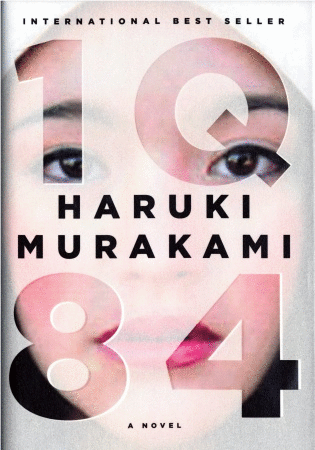
1Q84 Cover unveiled
The English translation of Haruki Murakami's 1Q84 is yet to hit the market - oh, how long I've been waiting for the book - but the cover of the US edition of the translation is just out.(Via Literary Saloon). And I like it.

Saturday, March 19, 2011
IMHO U R GR8: Texting in literature
It is the relentless onward march of the texters, the SMS (Short Message Service) vandals who are doing to our language what Genghis Khan did to his neighbours eight hundred years ago.
They are destroying it: pillaging our punctuation; savaging our sentences; raping our vocabulary. And they must be stopped.
Thursday, March 17, 2011
Sunday, March 13, 2011
Thirtieth anniversary of Alasdair Gray's Lanark
When Alasdair Gray published his novel Lanark thirty years ago, Anthony Burgess had these words: It was about time Scotland produced a shattering work of fiction in the modern idiom. This is it. The first major Scottish novelist since Sir Walter Scott.
The thirtieth anniversary of the novel is being celebrated now.
The thirtieth anniversary of the novel is being celebrated now.
Tuesday, March 8, 2011
Friday, March 4, 2011
Hanif Kureishi on the art of writing
The piece of writing I usually most enjoy doing is inevitably the thing I'm not supposed to be doing, so it can seem illicit. I like to work on something over a long period, returning to it repeatedly, adding, subtracting and altering, and taking advice from editors and friends, until I can't bear to look at it, which is when I guess it's done. Writing is highly labour intensive. It takes a lot of time – and much patient toleration of boredom, frustration and self-loathing – to achieve anything. Then you try to sell something to the world it doesn't know it needs.
Tuesday, March 1, 2011
Friday, February 25, 2011
Another Arundhati Roy interview
I don’t really do research in order to write. Finding out about things, figuring out the real story—what you call research—is part of life now for some of us. Mostly just to get over the indignity of living in a pool of propaganda, of being lied to all the time, if nothing else.
In Guernica,Amitav Kumar interviews Arundhati Roy.
In Guernica,Amitav Kumar interviews Arundhati Roy.
Wednesday, February 23, 2011
Why China has no great writers now
"Why is contemporary China short of works that speak directly? Because we writers cannot speak directly, or rather we can only speak in an indirect way Why does contemporary China lack good works that critique our current situation? Because our current situation may not be critiqued. We have not only lost the right to criticise, but the courage to do so; Why is modern China lacking in great writers? Because great writers are castrated while still in the nursery.
"
"
Monday, February 21, 2011
H.M. Naqvi interview
Q:Of late, one is noticing a reverse brain drain to Pakistan with well established writers coming back home, and making Pakistan their place of residence: Daniyal Mueenuddin, Mohsin Hamid and Hanif besides you. Is it something about the home country that is attracting the writers back, a kind of nostalgia or the feeling of being an outsider in the West?
A:I don't have empirical data on the matter. I can, however, speak for myself. I returned because I had no money. In any event, there's no place like home. I love Karachi. It's a wonderfully animate city. There are people on the beach at two in morning, traffic at three. You can have breakfast at four – halva, puri – and nihari at five. Moreover, as a writer I wouldn't want to be elsewhere for long. There's a story under every stone.
A:I don't have empirical data on the matter. I can, however, speak for myself. I returned because I had no money. In any event, there's no place like home. I love Karachi. It's a wonderfully animate city. There are people on the beach at two in morning, traffic at three. You can have breakfast at four – halva, puri – and nihari at five. Moreover, as a writer I wouldn't want to be elsewhere for long. There's a story under every stone.
Saturday, February 19, 2011
How and where do you find material for your books?
Answers from three writers
I find it among people. I find it in tiny rooms and in passenger terminals, in dreams, in books, and in experiences from the past that are the poetry of memories. I find it among the streets in which I grew up. I find it in my senses. Imagination is the extension of experience.
-Lars Saabye Christensen,Norwegian novelist
I don't know. What I know is that there is a certain way of life I have to live in order to be able to write the best I can. It doesn't mean only having enough free time and space, but also trying to avoid everyday stereotypes, traveling, doing adventurous things, experiencing uncertainty. That is what I need. My mind is what matters. Topics and material then come by themselves.
-Petra Hulova,Czech writer
In life, in my memories, in family history, friends' stories, textbooks, newspapers, television, documents, archives. I think it depends more on how you look at things than on the things themselves.
-Jenny Erpenbeck, German writer
I find it among people. I find it in tiny rooms and in passenger terminals, in dreams, in books, and in experiences from the past that are the poetry of memories. I find it among the streets in which I grew up. I find it in my senses. Imagination is the extension of experience.
-Lars Saabye Christensen,Norwegian novelist
I don't know. What I know is that there is a certain way of life I have to live in order to be able to write the best I can. It doesn't mean only having enough free time and space, but also trying to avoid everyday stereotypes, traveling, doing adventurous things, experiencing uncertainty. That is what I need. My mind is what matters. Topics and material then come by themselves.
-Petra Hulova,Czech writer
In life, in my memories, in family history, friends' stories, textbooks, newspapers, television, documents, archives. I think it depends more on how you look at things than on the things themselves.
-Jenny Erpenbeck, German writer
Monday, February 14, 2011
Leila Aboulela interview
"And those early years of my life in Sudan are still my bearing and measure. But I went in a different direction. That was my fate."
Leila Aboulela, Sudanese writer, is interviewed at Times Live.
Leila Aboulela, Sudanese writer, is interviewed at Times Live.
Sunday, February 13, 2011
Edna O'Brien interview
"When I read something thrilling or I write a good line. When I have a lovely drink - I drink white wine or champagne. When I'm with someone, usually it's one other person, rather than a crowd, whose intelligence and stimulatingness is great. Because one wants to be both inside one's self and removed from one's self. Those things make me happy.
"Nature makes me happy, even though I live in the city, deliberately; I don't think I have the inner resources to live alone in the country. I wish I knew more about music. I listen to classical music, and sometimes I am bestirred, but language is my first love in the arts, and then painting. I love paintings."
"Nature makes me happy, even though I live in the city, deliberately; I don't think I have the inner resources to live alone in the country. I wish I knew more about music. I listen to classical music, and sometimes I am bestirred, but language is my first love in the arts, and then painting. I love paintings."
Tuesday, February 8, 2011
Saturday, February 5, 2011
Sunday, January 30, 2011
Gliterature!
The Lit zone is the new hot spot. If earlier it was Rohit Bal taking his shirt that caught your pg 3 eye, now it'll be William Dalrymple like a big dervish(thankfully with his kurta on)doing the trick. There's a new influx of babalogs and Beautiful People in the earlier boring world of book events. The truth is: even the writers look smarter and prettier these days. With a dash of Brechtian 'temporary suspension of disbelief', you could be at a Taj hotel attending not the lunch of the winter collection of Tarun Tihalini but at the lunch of Rana Dasgupta's new novel.
Of course, it's from a story of an Indian daily's culture page, done by a literary savvy scribe. Take note of the tone of the writer. He seems to take great delight in reporting Dalrymple's trick, new influx of 'babalogs and Beautiful People'(who never read literature) in the book events, and glamorous book lunches.
Alas, this sums up the literary scenario in India and elsewhere, courtesy the new culture that free market economy has fostered. Literature is now touted as gliterature. Would you laugh or worry?
Of course, it's from a story of an Indian daily's culture page, done by a literary savvy scribe. Take note of the tone of the writer. He seems to take great delight in reporting Dalrymple's trick, new influx of 'babalogs and Beautiful People'(who never read literature) in the book events, and glamorous book lunches.
Alas, this sums up the literary scenario in India and elsewhere, courtesy the new culture that free market economy has fostered. Literature is now touted as gliterature. Would you laugh or worry?
Friday, January 28, 2011
Saturday, January 22, 2011
Jaipur Lit Festival & William Dalrymple
The article is more than a fortnight old, but since the Jaipur Lit Festival is still on, it's not stale yet, featuring as it does William Dalrymple, "the pompous literary arbiter of literary merit in India", who calls the shot as its director.
It is not for nothing that over the recent past, Dalrymple has been in conversation with authors as diverse as Tishani Doshi (though a romance linking Wales and Gujarat is perhaps a fit setting for him) and Sonia Faleiro (what could Dalrymple have to contribute to the Bar Girls of Bombay?; on the evidence of the evening, not much). Symbols matter, and if Dalrymple appears central to our literary culture, it says something far more damaging about us than about him.
It is not for nothing that over the recent past, Dalrymple has been in conversation with authors as diverse as Tishani Doshi (though a romance linking Wales and Gujarat is perhaps a fit setting for him) and Sonia Faleiro (what could Dalrymple have to contribute to the Bar Girls of Bombay?; on the evidence of the evening, not much). Symbols matter, and if Dalrymple appears central to our literary culture, it says something far more damaging about us than about him.
Thursday, January 20, 2011
Literary Festival or Fashion Week?
Some literary festivals have become the Bombay Times party of the book world. Not surprising, considering that some writers now get more advances than models. With money and fame both at their feet, the literati is no different from the glitterati. This is why even those whose bedtime reading is their credit card statement will elbow their way to the DPC Jaipur Literary Festival opening this Friday. It has evolved into a new genre of Fashion Week. Everyone is turned out in intellectual chic, or the bohemian Dalrumpled look.
From Jaipur to Kolkata, this is the season of literary festivals all across India. I know no one better to give a low-down on them than Bachi Karkaria, that fabulous columnist, with her cutting wit and humour.
From Jaipur to Kolkata, this is the season of literary festivals all across India. I know no one better to give a low-down on them than Bachi Karkaria, that fabulous columnist, with her cutting wit and humour.
Friday, January 14, 2011
Roberto Bolano on literature and exile
"Literature and exile, I think, are two sides of the same coin, our fate placed in the hands of chance. "I don't have to leave my house to see the world," says the Tao Te Ching, yet even when one doesn't leave one's house, exile and banishment make their presence felt from the start. Kafka's oeuvre, the most illuminating and terrible (and also the humblest) of the twentieth century, proves this exhaustively."
Wednesday, January 12, 2011
Sunday, January 9, 2011
Oh, the Joy of reading Haruki Murakami!
I've begun the new year with Haruki Murakami, and want to read his works exclusively this year. For a while now, Murakami has captured my attention and interest. Last year, it was Roberto Bolano who piqued me this way.
The Murakami book that I just finished was After the Quake, a collection of six short stories. I read one story a day, and though I was tempted to begin the next one, I decidedly held back. Each story had its resonance, and I needed to live it in full. For three stories, I jotted down my impressions there and then.
Thailand: A wonderful story about man-woman relationship in today's hectic world. The metaphor of polar bears is just as apt and brilliant.
All God's Children Can Dance: It's about a young man who seeks his biological father in vain. Offers great insights into religion (Christianity) and sexuality.
Super-Frog Saves Tokyo: An amazing story of Katagiri, an average Japanese ("All I do is eat, sleep and shit"), who fought his battle - not in real terms though - to save his beloved city from an earthquake.
The Murakami book that I just finished was After the Quake, a collection of six short stories. I read one story a day, and though I was tempted to begin the next one, I decidedly held back. Each story had its resonance, and I needed to live it in full. For three stories, I jotted down my impressions there and then.
Thailand: A wonderful story about man-woman relationship in today's hectic world. The metaphor of polar bears is just as apt and brilliant.
All God's Children Can Dance: It's about a young man who seeks his biological father in vain. Offers great insights into religion (Christianity) and sexuality.
Super-Frog Saves Tokyo: An amazing story of Katagiri, an average Japanese ("All I do is eat, sleep and shit"), who fought his battle - not in real terms though - to save his beloved city from an earthquake.
Saturday, January 8, 2011
Monday, January 3, 2011
Helon Habila interview
"People should not compare ours with the generation of Chinua Achebe. Our content is not the same. It is not this generation that will judge us. This generation judges the books written 50 years ago. Likewise we shall be judged by the next generation maybe in another 50 years."
Friday, December 31, 2010
New Year Resolution
The best resolution to make this New Year's Day might be to open your eyes to everything around you—while also recalling that most of our lofty resolutions will ultimately come to naught.
Pico Iyer reviews Arto Possillina's famous novel "The year of the Hare". But it's more than a review article. Iyer gives a rare and wonderful insight into living the other way. Which is consistent with the theme of the novel.
Pico Iyer reviews Arto Possillina's famous novel "The year of the Hare". But it's more than a review article. Iyer gives a rare and wonderful insight into living the other way. Which is consistent with the theme of the novel.
Sunday, December 26, 2010
Khushwant Singh's current take on Salman Rushdie
There is more to Rushdie than his fertile imagination and powerful pen. Besides his brain, he has other parts of his body well-endowed. How else can one explain that this beady-eyed, bearded man in his middle age had a succession of wives and mistresses to warm his bed? That is yet another reason why I envy and admire him.
Source: Khushwant Singh's column "With malice towards one and all" published in the Hindustan Times dated Dec 26, 2010.
Thursday, December 23, 2010
Literary greatness= a game of hype?
EILEEN BATTERSBY has an interesting article in The Irish Times
HYPE HAS a great deal to answer for. It embellishes, it manipulates, most of all, it distorts. Hype creates a subplot; it elevates a sideshow to a main event. If Jonathan Franzen had not taken nine years to write Freedom, it would most likely have been received as the novel it actually is – a sloppy, overwritten, mildly amusing extended sitcom that is being inaccurately, even grotesquely, hailed as a masterpie
HYPE HAS a great deal to answer for. It embellishes, it manipulates, most of all, it distorts. Hype creates a subplot; it elevates a sideshow to a main event. If Jonathan Franzen had not taken nine years to write Freedom, it would most likely have been received as the novel it actually is – a sloppy, overwritten, mildly amusing extended sitcom that is being inaccurately, even grotesquely, hailed as a masterpie
Sunday, December 19, 2010
" I have unbounded admiration for her."
KHUSWANT SINGH on ARUNDHATI ROY
I do not know Arundhati Roy well as I have met her briefly a couple of times. But I have unbounded admiration for her. She is good-looking, animated, unconventional, a gifted writer, gutsy and a champion of lost causes. I am by no means her only admirer; she has millions of them in India and abroad. I am not wrong in believing that she is the best known Indian woman in western democratic nations and regarded as the leading voice of dissent in democratic india.. To penalise her will further enhance her reputation abroad and bring India a bad name.
Source: Khuswant Singh's column "With malice towards one and all" in the Hindustan Times dated Dec 19, 2010.
I do not know Arundhati Roy well as I have met her briefly a couple of times. But I have unbounded admiration for her. She is good-looking, animated, unconventional, a gifted writer, gutsy and a champion of lost causes. I am by no means her only admirer; she has millions of them in India and abroad. I am not wrong in believing that she is the best known Indian woman in western democratic nations and regarded as the leading voice of dissent in democratic india.. To penalise her will further enhance her reputation abroad and bring India a bad name.
Source: Khuswant Singh's column "With malice towards one and all" in the Hindustan Times dated Dec 19, 2010.
Saturday, December 11, 2010
Liu Xiaobo's collection of poems in English
Literary news: Graywolf Press of Minneapolis will be publishing the first collection of poems in English by Liu Xiaobo, the Chinese dissident poet and literary critic who is the winner of this year's Nobel Peace Prize.
Wednesday, December 8, 2010
Mario Vargas Llosa's Nobel Lecture
"Without fictions we would be less aware of the importance of freedom for life to be livable, the hell it turns into when it is trampled underfoot by a tyrant, an ideology, or a religion. Let those who doubt that literature not only submerges us in the dream of beauty and happiness but alerts us to every kind of oppression, ask themselves why all regimes determined to control the behavior of citizens from cradle to grave fear it so much they establish systems of censorship to repress it and keep so wary an eye on independent writers. They do this because they know the risk of allowing the imagination to wander free in books, know how seditious fictions become when the reader compares the freedom that makes them possible and is exercised in them with the obscurantism and fear lying in wait in the real world. Whether they want it or not, know it or not, when they invent stories the writers of tales propagate dissatisfaction, demonstrating that the world is badly made and the life of fantasy richer than the life of our daily routine. This fact, if it takes root in their sensibility and consciousness, makes citizens more difficult to manipulate, less willing to accept the lies of the interrogators and jailers who would like to make them believe that behind bars they lead more secure and better lives.
"
"
Monday, December 6, 2010
Gao Xingjian interview
"Literature can neither change nor save the world. A work of literature is nothing more than the voice of the writer as an individual, and it is an illusion for any writer to think he or she can change the world. During the 20th century, literature became too intimately involved with politics. In China, literature became a screw that turned the machinery of proletariat dictatorship, and writers became public relations personnel of the Communist Party. But literature is--and should be--about exploring the complexities of human nature and seeking the truth. Literature must remain independent.
"
"
Tuesday, November 30, 2010
Mohsin Hamid’s talk about The Reluctant Fundamentalist
"As a novelist, I think of both my books as ‘buildings of the mind’. It is not my job to design a journey that has set junctions. The reader should be able to go wherever they want; whenever they want within the premise I have created. I like that fluidity."
Sunday, November 28, 2010
Khushwant Singh interview
In the Outlook magazine, Sheela Reddy has an interesting interview with Khushwant Singh, India's dirty old man.
“I’ve no idea how many of them will be read after I’m gone. I’ve done serious books like history and translations from the scriptures, translations from Urdu poetry and short stories from other languages. But what will last, I’ve no idea. As Hillaire Belloc said: “I hope when I’m dead it will be said/ his sins were scarlet/ but his books were read.
“I’ve no idea how many of them will be read after I’m gone. I’ve done serious books like history and translations from the scriptures, translations from Urdu poetry and short stories from other languages. But what will last, I’ve no idea. As Hillaire Belloc said: “I hope when I’m dead it will be said/ his sins were scarlet/ but his books were read.
Sunday, November 21, 2010
Sunday, November 7, 2010
Mario Vargas Llosa: my reading experience
Every year the Nobel Prize spurs me on to read (or reread) one or two imporatant works of the new Nobel Laureate. I’ve never read MarioVergas Llosa before, andI thought it was time to catch up on his novels.
The first novel I picked up - not by anybody’s recommendation, but from its unique title – was The Feast of the Goat . A 475-page,almost daunting tome.
But what an easy read! Meticulously researched, well-crafted. Spiced with lots of sex. Racy style. It’s about Rafel Trujillo, the despot of the Dominician Republic, and centres around his ssassination. It’s also about Urania Cabral, who was violated by Trujillo when she was just sixteen year old.
Mario Vargas Llosa depicts Trujillo as a man with rarified intelligence and refined tastes, even with a penchant for Pablo Neruda poems. Not very convincing for a paranoid who kills his enemies, real and perceived,at the drop pf a hat.
Half way through the novel, I found my interest flagging, but I was curious about the depiction of the ultimate scene where the debauchee would violate Urania, who was sent as a gift by her father, an onetime trusted aide of Trujillo, to win back his chief’s favour. The scene had one obvious thing missing. Urania’s mother was Trujillo’s most favourite woman, and he often boasted to his close aides that hers was the best cunt he ever enjoyed. But on this occasion, Trujillo never for a moment thinks of Urania as daughter of somone who aroused him in a big way and feels any exra excitement . Was Trujillo devoid of memory? Of course, these things matter little in the blockbuster plot of the novel. Then when he fails to have sex due to his prostate problem, the way he breakes her “cherry” – with a nail of his finger – is hugely repugnant.
Where is literature in all of these ghastly details? I don’t find any thing of value, or edifying in this kind of cartography.
The first novel I picked up - not by anybody’s recommendation, but from its unique title – was The Feast of the Goat . A 475-page,almost daunting tome.
But what an easy read! Meticulously researched, well-crafted. Spiced with lots of sex. Racy style. It’s about Rafel Trujillo, the despot of the Dominician Republic, and centres around his ssassination. It’s also about Urania Cabral, who was violated by Trujillo when she was just sixteen year old.
Mario Vargas Llosa depicts Trujillo as a man with rarified intelligence and refined tastes, even with a penchant for Pablo Neruda poems. Not very convincing for a paranoid who kills his enemies, real and perceived,at the drop pf a hat.
Half way through the novel, I found my interest flagging, but I was curious about the depiction of the ultimate scene where the debauchee would violate Urania, who was sent as a gift by her father, an onetime trusted aide of Trujillo, to win back his chief’s favour. The scene had one obvious thing missing. Urania’s mother was Trujillo’s most favourite woman, and he often boasted to his close aides that hers was the best cunt he ever enjoyed. But on this occasion, Trujillo never for a moment thinks of Urania as daughter of somone who aroused him in a big way and feels any exra excitement . Was Trujillo devoid of memory? Of course, these things matter little in the blockbuster plot of the novel. Then when he fails to have sex due to his prostate problem, the way he breakes her “cherry” – with a nail of his finger – is hugely repugnant.
Where is literature in all of these ghastly details? I don’t find any thing of value, or edifying in this kind of cartography.
Monday, November 1, 2010
Vinod Mehta on why he publishes Arundhati Roy so often
Arundhati Roy? Thirty-three pages and all. It is an honour and a privilege to have her byline in the magazine.I don’t agree with every word she writes, but by and large, Outlook and Arundhati are on the same page. Incidentally, I find her bitterest critics are the ones who read her most avidly.
Friday, October 29, 2010
Sunday, October 24, 2010
Pakistani writers: dual role
"Literature has always helped us to define who we are. This might even be one of the most important functions of writing; it is the biggest question that writers address when telling the stories of themselves and of others. Pakistani writers find themselves in the dual role of being storytellers as well as the interpreters of culture and politics to an eager, hungry Western audience."
Friday, October 22, 2010
So, how does Rohinton Mistry react?
I don't know how a writer - Rohinton Mistry in this case - exactly feels when one of his major works - award-winning Such a long journey-is all of a sudden banned or prohibited with a base and despicable motive(actually a ploy to raise the profile of the youngest member of the Shiv Sena's ruling Thackeray family, Aditya, who is currently a student at Mumbai University.) Mistry, hugely knowledgeable about India and its politics, analyzes the event dispassionately and responds to his book ban with great eloquence and dignity.
As for the grandson of the Shiv Sena leader, the young man who takes credit for the whole pathetic business, who admits to not having read the book, just the few lines that offend him and his bibliophobic brethren, he has now been inducted into the family enterprise of parochial politics, anointed leader of its newly minted “youth wing”. What can — what should — one feel about him? Pity, disappointment, compassion? Twenty years old, in the final year of a BA in History, at my own Alma Mater, the beneficiary of a good education, he is about to embark down the Sena’s well-trodden path, to appeal, like those before him, to all that is worst in human nature.
Does he have to? No. He is clearly equipped to choose for himself. He could lead, instead of following, the old regime. He could say something radical — that burning and banning books will not feed one hungry soul, will not house one homeless person nor will it provide gainful employment to anyone (unless one counts those hired to light bonfires), not in Mumbai, not in Maharashtra, not anywhere, not ever.
As for the grandson of the Shiv Sena leader, the young man who takes credit for the whole pathetic business, who admits to not having read the book, just the few lines that offend him and his bibliophobic brethren, he has now been inducted into the family enterprise of parochial politics, anointed leader of its newly minted “youth wing”. What can — what should — one feel about him? Pity, disappointment, compassion? Twenty years old, in the final year of a BA in History, at my own Alma Mater, the beneficiary of a good education, he is about to embark down the Sena’s well-trodden path, to appeal, like those before him, to all that is worst in human nature.
Does he have to? No. He is clearly equipped to choose for himself. He could lead, instead of following, the old regime. He could say something radical — that burning and banning books will not feed one hungry soul, will not house one homeless person nor will it provide gainful employment to anyone (unless one counts those hired to light bonfires), not in Mumbai, not in Maharashtra, not anywhere, not ever.
Monday, October 18, 2010
Salman Rushdie on multi-tasking
“I am one of those people who find it impossible to multi-task. It has to be one thing at a time."
Saturday, October 16, 2010
Puja literature: Debesh Roy's Lingalekh
The only Bengli novel that I read during this Puja – my time for experiencing Bengali prose – is “Lingalekh” by Debesh Roy who I stopped reading altogether following his pro-government stand on the Singur movement.
What's Lingalekh? I looked up in the only Bengali dictionary that I have, but did not get it. I think it is kind of treatise on male sex organ.
It’s an allegorical novel about today’s changed environs in Bengal when the 33-year-old Marxist regime is on the way out, and Mamata Banerjee’s party Trinamul Congress (satirically described “Mulo party” by Roy) is all set to be at the helms. Since my last reading,Roy has not changed a bit: his allegiance to the Left Front seems as intact, notwithstanding its visible degeneration, depradations and disconnect with the masses over the years. In the novel he lambasts, in a subtle way though, the intellectuals and writers supporting Ms Banerjee in her march to power.
But what I must admit is that Debesh Roy is still compelling, and has world-class craftsmanship to dwell on any subject. He’s more than a story-teller,a well-informed post-modernist actually, and has a brandwidth few writers of world literature have.
I wonder why translators are still not taking him on.
Are you listening, Mr Ramaswamy?
What's Lingalekh? I looked up in the only Bengali dictionary that I have, but did not get it. I think it is kind of treatise on male sex organ.
It’s an allegorical novel about today’s changed environs in Bengal when the 33-year-old Marxist regime is on the way out, and Mamata Banerjee’s party Trinamul Congress (satirically described “Mulo party” by Roy) is all set to be at the helms. Since my last reading,Roy has not changed a bit: his allegiance to the Left Front seems as intact, notwithstanding its visible degeneration, depradations and disconnect with the masses over the years. In the novel he lambasts, in a subtle way though, the intellectuals and writers supporting Ms Banerjee in her march to power.
But what I must admit is that Debesh Roy is still compelling, and has world-class craftsmanship to dwell on any subject. He’s more than a story-teller,a well-informed post-modernist actually, and has a brandwidth few writers of world literature have.
I wonder why translators are still not taking him on.
Are you listening, Mr Ramaswamy?
Friday, October 15, 2010
From David Grossman's Peace Prize acceptance speech
"I believe that the most important things in the history of mankind take place neither on the battlefield, nor in the halls of palaces, nor in the corridors of parliaments, they happen in the kitchens, bedrooms and children's rooms."
Wednesday, October 13, 2010
Sunday, October 10, 2010
Liu Xiaobo quote
"I often say that Chinese people have no spiritual dimension. Take for example, film-making, Chinese people never make good psychological or spiritual films. That is to say that, Chinese people have no psyche or spirit to speak of. All of our films are so animalistic. What’s more, we make a bad job of describing this kind of animalism because there are no free animals - it’s like life in a big pig sty. At least now we are in a situation where people get enough to eat and don't lack materially: but, if you are looking for spirituality forget it."
Saturday, October 9, 2010
Mario Vargas Llosa interview/1
Adam Smith, editor, Nobelprizeorg, interviewed Mario Vargas Llose on telephone just after the announcement of the 2010 Nobel Prize in literature yesterday.
Excerpt:
Q: May I ask about your interest in politics? You say that you entered politics from a sense of obligation. Was this personal obligation or the obligation of the writer?
MVL: Well, you know, when I ... I, I think writers are citizens too, you know, and have the moral obligation to participate in the civic debate, in the debate about the solutions to the problems that the societies face. That doesn't mean that I think that writers should become professional politicians. No, I never thought, I never wanted to become a professional politician. I did it once because the situation in Peru was deeply, deeply serious. We had hyperinflation, we have terrorism, there was war, civil war, in the country. And, in this environment, my impression was that the very fragile democracy that we had [phone line drops out] was on the point of collapse! So, it was in this circumstances. But, I did it as something very exceptional and knowing perfectly well that this would be a transitory experience, no, which it was.
But, on the other hand, I am ... I, I think that writers, as the rest of citizens, should participate in the civic problems. Otherwise, you couldn't ... you couldn't protest! You couldn't [phone line drops out] participate. If you believe in democracy, democracy is participation, and I don't think why writers, or artists, or intellectuals should exonerate themselves of this moral obligation to participate.
Excerpt:
Q: May I ask about your interest in politics? You say that you entered politics from a sense of obligation. Was this personal obligation or the obligation of the writer?
MVL: Well, you know, when I ... I, I think writers are citizens too, you know, and have the moral obligation to participate in the civic debate, in the debate about the solutions to the problems that the societies face. That doesn't mean that I think that writers should become professional politicians. No, I never thought, I never wanted to become a professional politician. I did it once because the situation in Peru was deeply, deeply serious. We had hyperinflation, we have terrorism, there was war, civil war, in the country. And, in this environment, my impression was that the very fragile democracy that we had [phone line drops out] was on the point of collapse! So, it was in this circumstances. But, I did it as something very exceptional and knowing perfectly well that this would be a transitory experience, no, which it was.
But, on the other hand, I am ... I, I think that writers, as the rest of citizens, should participate in the civic problems. Otherwise, you couldn't ... you couldn't protest! You couldn't [phone line drops out] participate. If you believe in democracy, democracy is participation, and I don't think why writers, or artists, or intellectuals should exonerate themselves of this moral obligation to participate.
Thursday, October 7, 2010
Mario Vargas Llosa wins the Nobel Prize in literature, 2010
Congratulation Mario Vargas Llosa!
Mario Vargas Llosa is Peruvian by birth, and truly an international citizen, who embraces multiple genres (novels, essays, politics, journalism).
In 2002, Philip Hensher wrote about him, "When a novelist as gifted, intelligent and perceptive as Mario Vargas Llosa takes on the subject of tyranny and the fantasies of tyrants, the results are spectacular and incontrovertibly plausible. There is nobody comparable in the English-language novel (.....) The Nobel Prize, surely, cannot be long coming."
Mario Vargas Llosa is Peruvian by birth, and truly an international citizen, who embraces multiple genres (novels, essays, politics, journalism).
In 2002, Philip Hensher wrote about him, "When a novelist as gifted, intelligent and perceptive as Mario Vargas Llosa takes on the subject of tyranny and the fantasies of tyrants, the results are spectacular and incontrovertibly plausible. There is nobody comparable in the English-language novel (.....) The Nobel Prize, surely, cannot be long coming."
Monday, October 4, 2010
2010 Nobel Prize for literature : Who're you rooting for?
When I write this, the Nobel jury has already picked up the winner, but does not give as any hint as to who it could be.
Given the Swedish Academy's unique tastes and tendencies, it's difficult to even guess the winner. But we can still have some speculation.
Is it Syrian poet Adonis, or Americans Philip Roth and Joyce Carol Oates,or South Korea's Ko Un or Algerian writer Assia Djebar?
Or would it be Swedish poet and writer Tomar Transtromer, the octogenarian who has long deserved the Nobel Prize for his works?
Or some obscure writer/poet who we have not read or heard about at all?
Little chance for Haruki Murakami or Mahasweta Devi this time.
The Swedish Academy is not very fond of American authors, and has in recent years shown its leanings for dissident European authors( Elfiede Jelinek, Harold Pinter, Herta Muller, for example)
Last year I rooted for Haruki Murakami. This year I've no candidate, so to say. But I'm curious. I've profound respect for the Nobel Committee members who famously don't toe the line of our so-called market, and have great tastes for world literature.
Given the Swedish Academy's unique tastes and tendencies, it's difficult to even guess the winner. But we can still have some speculation.
Is it Syrian poet Adonis, or Americans Philip Roth and Joyce Carol Oates,or South Korea's Ko Un or Algerian writer Assia Djebar?
Or would it be Swedish poet and writer Tomar Transtromer, the octogenarian who has long deserved the Nobel Prize for his works?
Or some obscure writer/poet who we have not read or heard about at all?
Little chance for Haruki Murakami or Mahasweta Devi this time.
The Swedish Academy is not very fond of American authors, and has in recent years shown its leanings for dissident European authors( Elfiede Jelinek, Harold Pinter, Herta Muller, for example)
Last year I rooted for Haruki Murakami. This year I've no candidate, so to say. But I'm curious. I've profound respect for the Nobel Committee members who famously don't toe the line of our so-called market, and have great tastes for world literature.
Subscribe to:
Posts (Atom)
Subscribe To


 Posts
Posts
My Blog List
-
-
Cheikh Hamidou Kane (1928-2026)22 hours ago
-
-
-
-
-
Briefly Noted Book Reviews2 years ago
-
-
-
-
Literary family feuds6 years ago
-
In Her Own Time: Mari Coates6 years ago
-
-
-
Moving Announcement!8 years ago
-
The Real World is emerging now9 years ago
-
-
Donald Trump’s New Deal10 years ago
-
-
-
-


