"if the work of my contemporaries and myself lasts a few millennia, our texts may become authorless too. Which would be no bad thing. I do like the idea of books being famous and authors remaining anonymous."
--Salman Rushdie
--Salman Rushdie


The only antidote to this writing-group circle-jerk is criticism: maybe we can revitalize a moribund art form by slamming Franzen’s work for the shit it is. So I will say it again: Purity is a horrible abortion. Its characters are flat, the dialogue is trite, and plot is as predictable and hackneyed as the jokes. It is less a “great American novel” than a Guy’s American Kitchen Sink of novels.

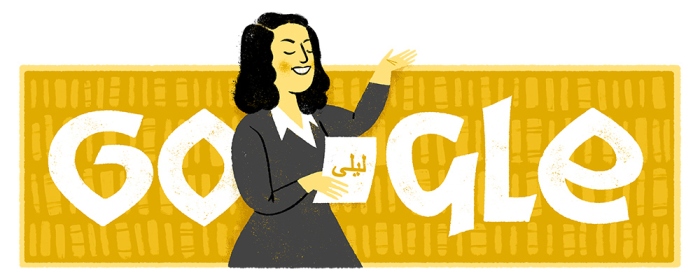 |
| Layla in "Open Door" by Egyptian novelist and activist al-Zayyat who died in 1996 |
For a long time now, especially since the Iraq and Afghanistan wars, I’ve despised literature for its impotence to change the world for the better, its inability to dissuade or enlighten the people who do harm. Sometimes I think that language as a whole is an irrelevance, that all the true motivations are non-verbal. (I was writing about this as far back as 1996, in a story called The Tunnel of Love). But language is all we have. And although The Book of Strange New Things expresses that despondency and frustration about communication, it’s a kind of love song to intimacy and good intentions as well. And good humour. At one point, Peter laments to Bea that he would need to have the skills of a novelist to describe to her what he’s seeing and experiencing. The reader can relish that, because you’re experiencing everything in technicolour and sensurround via my prose, while Bea has to make do with Peter’s absurdly crappy letters. The gulf is terrifying but also funny.---Michel Faber
Laszlo Krasznahorkai is a visionary writer of extraordinary intensity and vocal range who captures the texture of present day existence in scenes that are terrifying, strange, appallingly comic, and often shatteringly beautiful. The Melancholy of Resistance,Satantango and Seiobo There Below are magnificent works of deep imagination and complex passions, in which the human comedy verges painfully onto transcendence. Krasznahorkai, who writes in Hungarian, has been superbly served by his translators, George Szirtes and Ottilie Mulzet.
I try to make the text flow the best I can, particularly where the sentences are long and involved. I want the feel of English but the intensity of Karl Ove, so I insist on the punctuation of the Norwegian. Too many semicolons and colons—which copy editors would instinctively feel need to be there—interrupt the flow and make the text feel too organized. I don’t like to stray too far from the Norwegian, but I want the English to feel natural, particularly the dialogues. Finding that line is what keeps translators awake at night. I’m not sure anyone can give you instructions about what to do. You develop with experience. According to the book you are translating.-- Don Bartlett
It’s probably a very big mistake. Well, maybe not a mistake, but a risk. I was very hesitant to republish it. I’ve had this connection to New Directions for more than twenty years, and they wanted to publish the book, but I said, “It’s not for America. It’s an obscure book, a complicated book, a coded book".

 Posts
Posts


